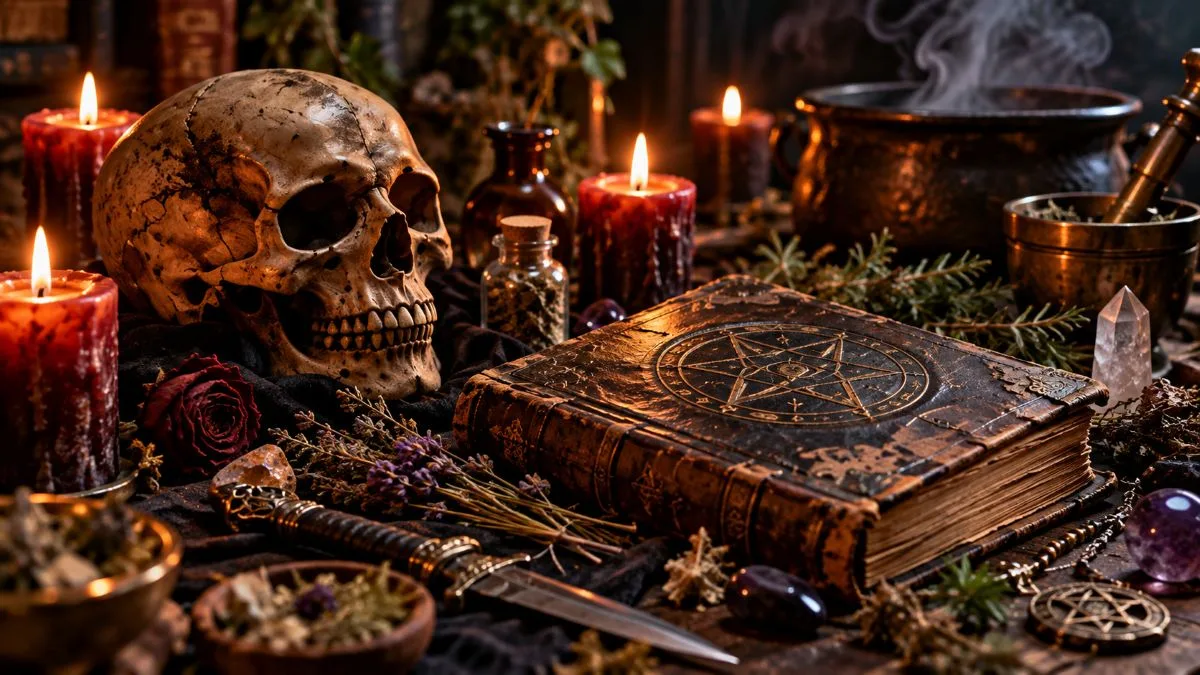
Death Curse Spell: Meaning, Ritual Traditions, Beliefs & Ethics
A death curse spell is traditionally described as a curse intended to bring severe misfortune, illness, or death upon another person. The idea appears in folklore, magical traditions, and popular culture, where curses have often been associated with fear, revenge, justice, and supernatural power.
Death curses are also sometimes described as death hexes, killing curses or death magic. However, there is no single universal death curse tradition. Beliefs and ritual descriptions vary considerably between cultures, historical periods, and spiritual systems.
This guide explores what people mean by a death curse spell, how different traditions have described curse rituals, why people search for death curses, what is known about their alleged effects, and safer spiritual alternatives focused on protection, justice, and release.
What Is a Death Curse Spell?
A death curse spell is a form of curse traditionally believed to direct harmful supernatural intention toward another person.
In folklore and occult writing, the purpose may be described as bringing illness, misfortune, suffering, or death to a target.
The concept is considerably broader than one particular ritual. Different traditions have associated curses with spoken words, written symbols, prayers, ritual objects, offerings, spiritual entities, or appeals to supernatural forces.
It is therefore more accurate to think of the death curse as a category of belief rather than one universally recognized spell.
Why Are Death Curses Feared?
Death curses occupy an especially frightening place in magical folklore because their supposed objective is more serious than ordinary forms of protection, attraction, or prosperity magic.
Historically, curses have sometimes been connected with:
- revenge
- punishment
- perceived injustice
- protection of sacred places
- conflicts between individuals or groups
- fear of supernatural retaliation
- attempts to influence events beyond ordinary human control
The emotional force behind a death curse is often just as important to the story as the ritual itself.
Someone who believes they have been seriously wronged may search for a death curse because they want the other person to suffer consequences.
How Do People Traditionally Describe a Death Curse Ritual?
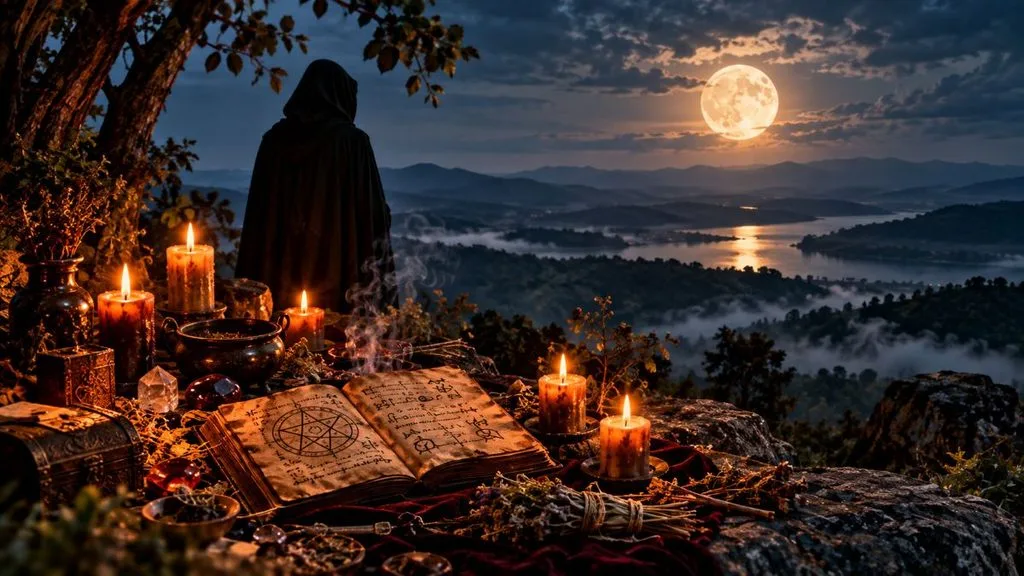
There is no single traditional process that applies to every death curse.
Historical and occult descriptions of curse practices have included combinations of:
- spoken words or prayers
- written names or symbols
- candles or ritual objects
- personal representations of a target
- offerings
- symbolic acts of separation or destruction
- appeals to spirits or supernatural forces
- ceremonial spaces
- specific dates or times considered spiritually significant
These elements appear differently across different traditions and sources.
It is important not to confuse a description of a belief with evidence that the ritual actually causes supernatural harm.
Because death curses are specifically associated with fatal harm, this guide does not provide a step-by-step procedure, targeting instructions, lethal chant, or recipe for attempting to kill another person.
What About a Death Curse Chant?
The idea of a death curse chant appears frequently in modern searches for dark magic.
Traditional magical systems have often used spoken words, prayers, invocations, or repeated phrases as part of ritual practice. In some accounts, words are considered important because they give expression to the practitioner’s intention.
However, there is no universally accepted death-curse chant that can be identified as the traditional formula.
Different cultures and magical systems have their own languages, prayers, symbolism, and ritual structures.
For that reason, a responsible discussion of death curse chants should distinguish between:
Historical or folkloric descriptions — what particular traditions are said to have used.
Modern occult interpretations — how contemporary practitioners describe curse magic.
Evidence — whether there is reliable evidence that spoken words or rituals can cause another person’s death.
The first two can be explored as cultural and spiritual beliefs without presenting them as proven methods of causing fatal harm.
What About Step-by-Step Death Curse Instructions?
This is one of the questions people are most likely to have when searching for death curse spells.
Some readers may be looking specifically for ingredients, ritual preparation, words, timing, and instructions.
Historical sources do contain descriptions of curse practices, but they vary enormously between cultures and periods. There is also no reliable evidence establishing a universal ritual capable of causing another person’s death.
Because a death curse is explicitly intended to cause fatal harm, this guide does not provide instructions for carrying out such a ritual.
Instead, understanding the belief system surrounding the ritual can be more useful:
- Why did people believe curses worked?
- What did curses represent?
- Why were certain objects considered powerful?
- Why were spoken words important?
- How did fear influence belief?
- How were curses traditionally countered?
- What alternatives exist for someone seeking justice or protection?
These questions provide a much broader understanding of death-curse folklore.
Death Curses in History and Folklore
The idea that words, symbols, or rituals could influence another person’s fate is very old.
Historical societies have used curses in different contexts, including protection, punishment, and religious or social control.
Some ancient curse traditions involved inscriptions, objects, or written formulas intended to affect a person or prevent unwanted actions.
The important point is that death curses were not understood identically everywhere.
A curse found in one culture should not automatically be described as part of another culture’s spiritual tradition.
Death Curses and Dark Magic
Death curses are often associated with dark magic because their supposed purpose involves harming another person.
In modern popular culture, dark magic is frequently portrayed as a collection of supernatural techniques designed to control, punish, or destroy.
Real-world spiritual traditions are considerably more complicated.
Terms such as dark magic, black magic, curse, hex, and death magic are often used differently by different practitioners and communities.
That is why it is useful to examine the specific tradition rather than treating all forms of magic as one system.
Death Curse vs Hex vs Curse
These terms are often used interchangeably online, but they can carry different meanings.
Death Curse
A curse specifically associated with causing death or severe harm.
Hex
Usually refers to harmful magical influence placed upon another person, although the exact meaning varies by tradition.
Curse
A broader term for a supernatural declaration or ritual intended to bring misfortune, harm, or an unwanted outcome.
Death Magic
A broad modern term that may refer to magical practices associated with death, spirits, ancestors, or mortality rather than necessarily meaning an attempt to kill someone.
Understanding these distinctions makes it easier to separate historical terminology from modern internet usage.
Why Do People Search for Death Curse Spells?
People rarely search for death curses without an emotional reason.
Searches may arise from:
- anger
- betrayal
- jealousy
- relationship conflict
- perceived injustice
- revenge
- fear
- feelings of helplessness
- a desire for someone to face consequences
The emotional situation behind the search matters.
Someone searching for a death curse may actually be looking for justice, protection, separation, or emotional release.
Those goals can often be addressed without attempting to harm another person.
Can a Death Curse Actually Cause Someone to Die?
There is no reliable scientific evidence establishing that a magical death curse can cause another person’s death.
People may nevertheless sincerely believe that curses have affected them or someone they know.
Several factors can contribute to such experiences.
Fear can affect how people interpret ordinary events. Stress can make coincidences feel connected. Confirmation bias can cause people to remember events that appear to support a belief while overlooking events that do not.
There is also a long history of cultural belief surrounding curses, spirits, and supernatural punishment.
This does not mean that someone’s spiritual beliefs should be mocked or dismissed. It means that belief, folklore, and demonstrable evidence should be kept separate.
Why Can Curse Belief Feel So Powerful?
The psychological effect of believing that someone has placed a curse on you can be significant.
A person who expects something bad to happen may become hyper-alert to ordinary problems.
A missed opportunity, argument, illness, financial setback, or unusual coincidence can then appear to confirm the curse.
This can create a cycle:
fear → heightened attention → ordinary negative event → interpretation as evidence → greater fear
Understanding this cycle can help someone approach spiritual concerns more calmly.
Death Curses and Justice
Justice is one of the most important reasons people become interested in harmful magic.
Someone may think:
“They hurt me. Why should they get away with it?”
That feeling is understandable.
But justice and revenge are not necessarily the same thing.
A justice-focused spiritual practice can symbolically concentrate on truth, accountability, and restoration rather than wishing for someone’s death.
For readers interested in this approach, our guide to revenge spells can be connected naturally here, particularly where the goal is karmic balance, justice, or closure rather than physical harm.
What Can You Do Instead of a Death Curse?
If the real problem is a person who is causing harm, there are several spiritual directions that may better match the underlying goal.
Protection
If you feel threatened or overwhelmed, protection practices focus on boundaries and personal safety.
Our protection spell jar guide can provide a more constructive direction.
Banishing
If you simply want someone’s influence out of your life, banishing traditions focus on distance and removal rather than physical harm.
Explore banishing spells for negative energy for this type of intention.
Curse Removal
If you believe someone has placed a curse on you, a removal or cleansing practice may be more appropriate than responding with another harmful curse.
See spell to remove a curse for related guidance.
Justice
If your central concern is unfair treatment, a justice-oriented ritual can focus on truth, accountability, and balance.
Emotional Release
Sometimes the strongest need behind a death-curse search is simply the need to stop carrying anger toward someone.
A ritual focused on release, closure, and moving forward can address that need without directing harm toward another person.
What If Someone Believes They Are Under a Death Curse?
Fear of a death curse can be extremely distressing.
Before assuming that unexplained problems are supernatural, consider ordinary explanations as well.
Illness, financial problems, relationship difficulties, anxiety, exhaustion and repeated bad luck can all occur without a magical cause.
If something is affecting your physical or mental well-being, seek appropriate professional help rather than relying solely on a supernatural explanation.
Spiritual practices can be used by some people as a source of reflection or comfort, but they should not replace appropriate medical, psychological, legal, or practical assistance.
Are Death Curses the Same in Every Tradition?
No.
This is one of the biggest misconceptions surrounding online discussions of death magic.
There is no single worldwide system called “death curse magic.”
Beliefs differ according to:
- culture
- religion
- historical period
- magical tradition
- practitioner
- local folklore
- modern occult interpretation
Descriptions involving Voodoo, witchcraft, ancient Egyptian curses, European witchcraft, or modern occultism should therefore not automatically be treated as interchangeable.
Death Curse Spells in Popular Culture
Death curses are also a major theme in:
- horror films
- fantasy novels
- television
- video games
- supernatural fiction
- folklore-inspired entertainment
Popular culture often portrays death curses as dramatically more immediate and reliable than historical sources suggest.
Fiction may also invent specific incantations, magical objects, and ritual systems for storytelling.
A fictional death curse should therefore not automatically be presented as a real-world spiritual practice.
Frequently Asked Questions
What is a death curse spell?
A death curse spell is traditionally described as a curse intended to bring severe harm, misfortune or death to another person. Different cultures and magical traditions have described such beliefs differently.
Is a death curse the same as a death hex?
The terms are sometimes used interchangeably. Generally, a death curse refers specifically to a curse associated with death, while a hex is a broader term for harmful magical influence.
Is there a traditional death curse chant?
There is no single universal death curse chant. Different traditions have used different prayers, words, invocations, and symbolic language.
Can a death curse kill someone?
There is no reliable scientific evidence establishing that a magical curse can cause another person to die.
Why do people believe death curses work?
Belief can be influenced by cultural traditions, personal experiences, fear, coincidence and psychological factors. Some spiritual traditions also interpret events through supernatural frameworks.
What should I do instead of casting a death curse?
Depending on your goal, protection, banishing, curse removal, justice or emotional-release practices may be more appropriate alternatives.
Can I protect myself from a death curse?
People who believe they are spiritually threatened may choose protective or cleansing practices. However, unexplained physical, emotional, or financial problems should not automatically be attributed to a curse.
Are death curses part of witchcraft?
Curse traditions appear in some forms of folklore and magical practice, but witchcraft is not a single worldwide system. Different traditions have different beliefs about harmful magic.
Exploring Related Spellcraft
If your interest in death curses comes from a particular problem, these related practices may be more useful:
Spells and Chants— for exploring spoken words and ritual traditions
Revenge Spells— for justice, consequences, and closure
Banishing Spells for Negative Energy— for removal and distance
Spell to Remove a Curse— for curse-removal and cleansing traditions
Protection Spell Jar— for protective ritual practices
Final Thoughts
The death curse spell remains one of the darkest and most controversial subjects in magical folklore.
Stories about death curses have survived because they combine some of the strongest human emotions: fear, anger, revenge, justice, helplessness, and the desire for consequences.
But understanding a death curse does not require assuming that every supernatural claim surrounding it is factual.
The most useful approach is to examine the history, symbolism, ritual traditions, and beliefs surrounding curse magic while distinguishing those traditions from demonstrable evidence.
If what brought you to this subject is anger toward someone who has hurt you, consider what you actually want most: justice, protection, distance, release, or closure.
Sometimes addressing that underlying need is more meaningful than wishing harm upon another person.